
Every so often a piece of research arrives that shifts your thinking and reminds you that even the things you think you know still have surprises in them. This happened recently when we read Environment Agency officer Sarah Darke’s MSc dissertation for University of Plymouth.
We’ve worked with Vertipools for more than a decade. We know them as seashore habitats first and foremost. They give wildlife a foothold on smooth seawalls and help return some structure and complexity to the intertidal zone. Their value in that regard is proven and continues to grow year by year. What we hadn’t seen so clearly before now is their potential in flood and coastal defence.
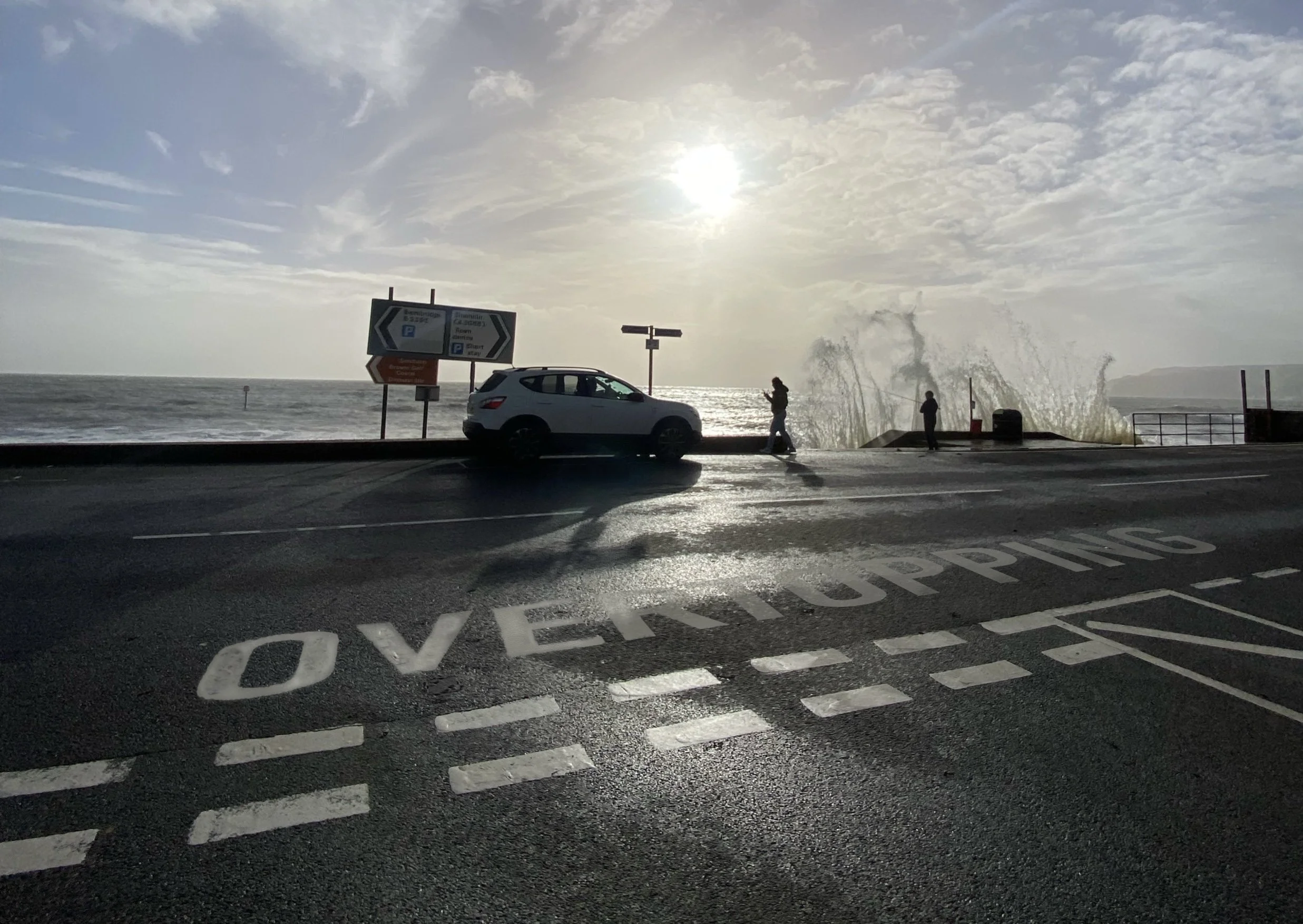
With Sarah we set out to explore wave overtopping. Could a habitat unit like a Vertipool alter the way waves behave when they hit a seawall? The answer turned out to be yes…..a clear yes! Every configuration she tested reduced wave overtopping compared with a bare wall. That alone is worth celebrating. The real eye-opener though was the positioning, a single row of Vertipools at the very top of the seawall did the most work. A clean horizontal line, no additional rows beneath produced a 97% decrease in wave overtopping. Once anything was added lower down the effect at the top diminished.
This is fascinating because the ecological story lives further down the wall. That lower intertidal band is where we see the strongest colonisation and the richest mix of species, so now we have a bit of tension to play with. The hydraulic benefit wants to sit high up while the intertidal ecological value sits low. It is exactly the sort of design puzzle we enjoy. Two systems overlapping and interacting and asking us to rethink the assumptions baked into both.
It also gives us a clear map for our next steps. Throughout 2026 Artecology will be running a new line of R&D that builds on Sarah’s findings. We want to understand how to hold both benefits in the same place without one blunting the other. Smaller units may help, the S-Type Vertipool for example has less bulk and might sit comfortably lower down without interrupting what the upper row is doing. Our Refugia Tiles may also come into their own here, they provide microhabitats and textural cues for early colonisation but do not present the same level of protrusion into the wave path. It feels likely that a mix of models and scales will form the basis of the next generation of arrays.
There is also the question of forces. Sarah’s work focused on overtopping performance rather than on the energy and pressures the units themselves encounter, so we now need to explore dynamic loading in more detail. What forces do the units experience, how do the fixings behave under repeated impacts, where are the stress points. All of that will feed into refinements for future deployments particularly in more energetic environments.
This all sits within a wider national picture too. The shift from the old National Infrastructure Commission to the new National Infrastructure and Service Transformation Authority signals a continued interest in infrastructure that considers climate people place and value as linked not separate. Vertipools sit neatly in that space, they were created to support life but now appear to offer genuine resilience benefits as well. That is the kind of multifunctionality that national bodies say they want from future infrastructure. It feels important that we bring this Island based work into that conversation.
So the next few years will see more flume time, the start of field testing in Sandown Bay, and more time on the wall watching what actually happens when the storm waves breach the seawall. We will combine ecological surveys, and community engagement with loading forces and overtopping measurements to see how these realms coexist and where they might reinforce each other. The long term aim is simple. Coastal structures that work with nature and people rather than edit them out. Structures that carry ecological uplift and community resilience value in the same space at the same time.
Vertipools began life as a way to put rockpools back where they had been lost. This new research shows they may also have a role to play in the future design of our coastal defences. It is an exciting moment for us and we look forward to sharing the results of the next phase of work as it unfolds.