
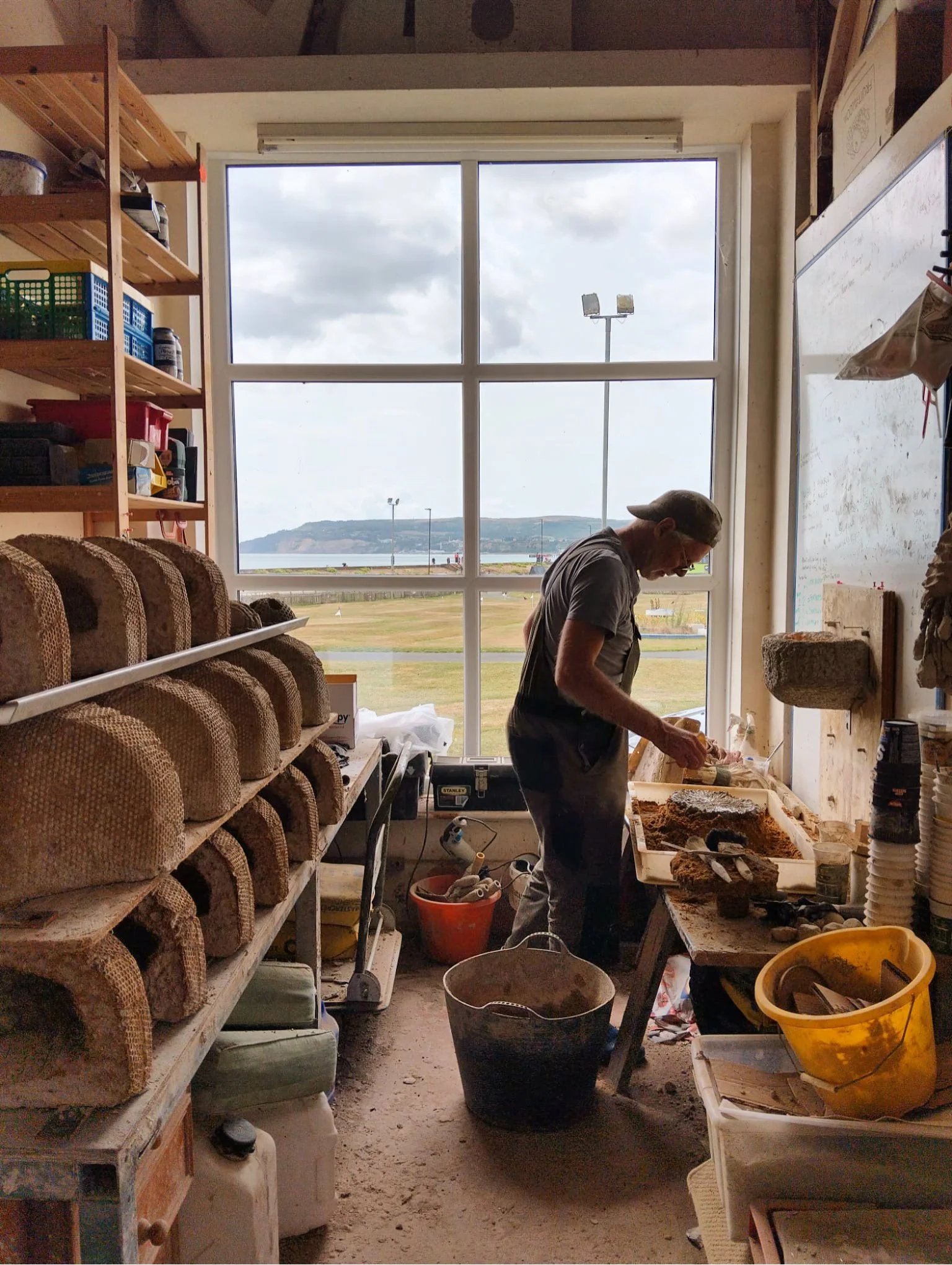
A busy couple of weeks or so at Artecology
The last couple of weeks at Artecology have had that familiar rhythm we’ve seen before at this time of year. In short lots of things seem to happen at once.
Orders being made, packed and sent out into the world,….conversations around the studio table, visitors dropping in with new ideas. The occasional moment to step back and notice that all these different threads are somehow part of the same story.
A lot of our team time has been spent fulfilling product orders recently. There’s something quietly satisfying about that process,…many of the things leaving the studio started life as rough sketches, strange experiments, or half formed ideas. Over time they evolve into objects that people actually want to put into real landscapes. Packing them up and shipping them off always feels like a small milestone.
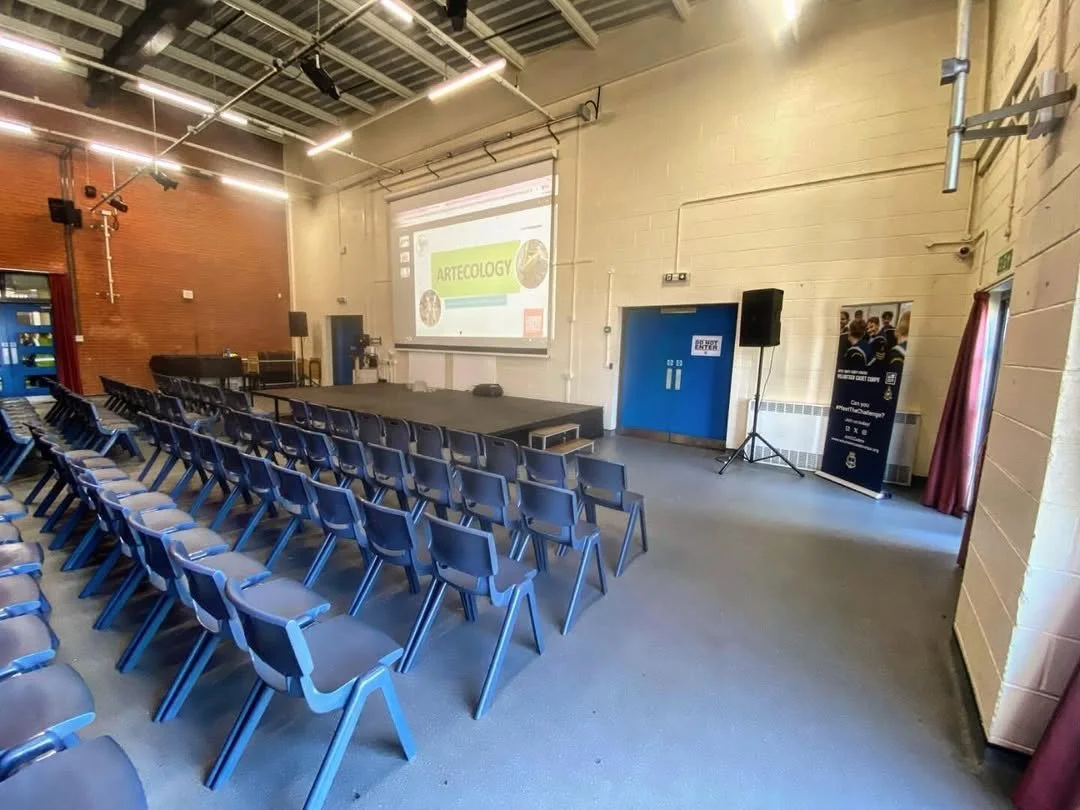
Speaking with Year 7 students
One particularly memorable moment was a visit to Miltoncross Academy in Portsmouth, where I had the chance to speak to around a hundred Year 7 students.
I’ve spoken to quite a few school groups over the years, but this one stood out.
Students at that age have a brilliant combination of curiosity and directness,…they ask questions adults sometimes forget to ask. Some of the questions were genuinely excellent. Why do certain animals only live in very specific habitats? Are humans part of nature or separate from it? And if small things can make a difference to wildlife, why don’t we do more of them?
You could feel the room leaning into the conversation, which is always a good sign.
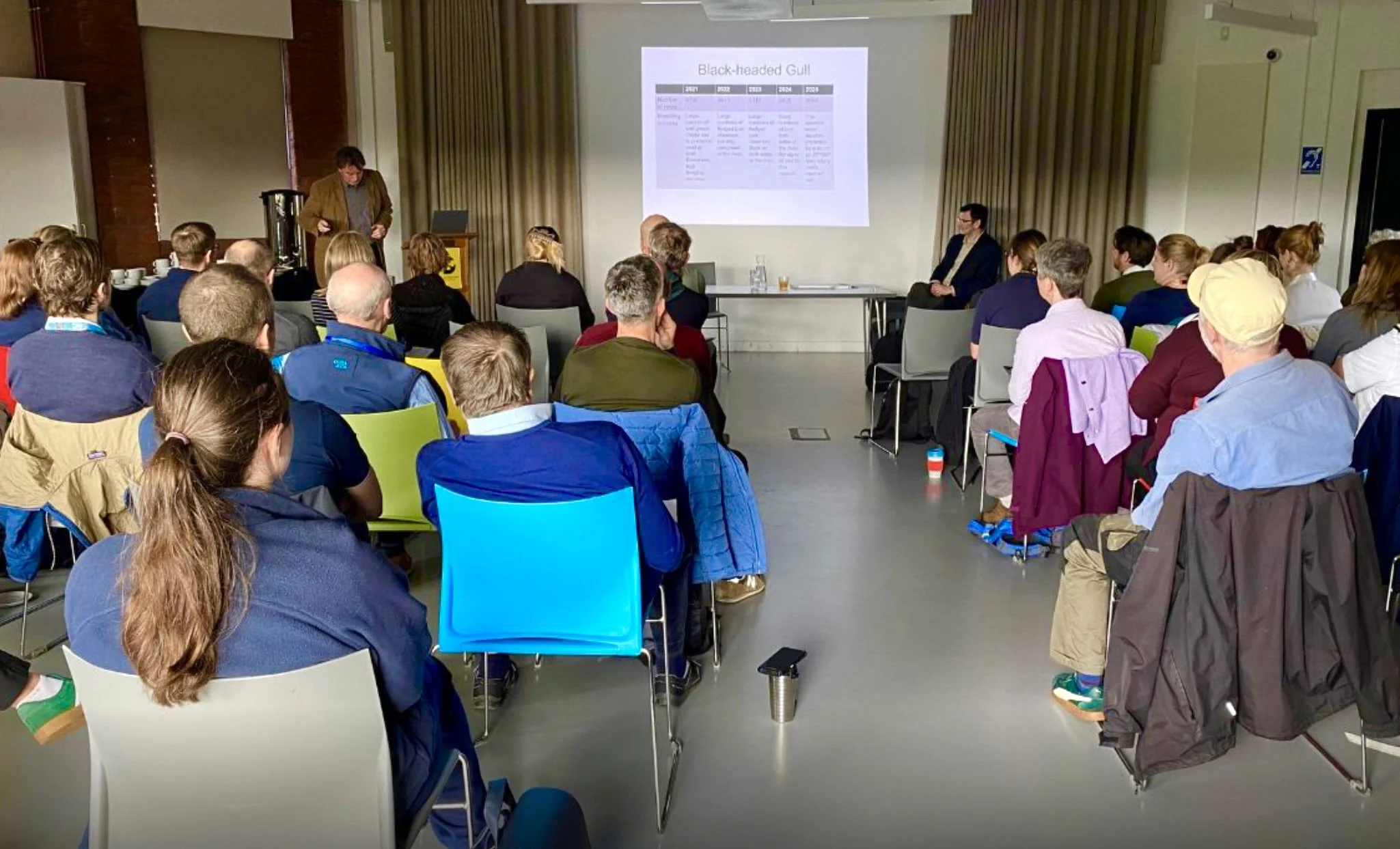
Fractals, nature and human wellbeing
In Portsmouth at the March Solent Forum gathering I had a really interesting meeting with Mandy Preece from Natural England. Our conversation landed on the subject of fractals in nature and the emerging research around their effects on human wellbeing.
Fractals are those repeating patterns you see everywhere in natural environments. The branching of trees, the form of river systems, the shape of coastlines, even the structure of ferns and lichens. Scientists are increasingly finding that exposure to these kinds of patterns appears to help regulate our body systems and reduce stress.
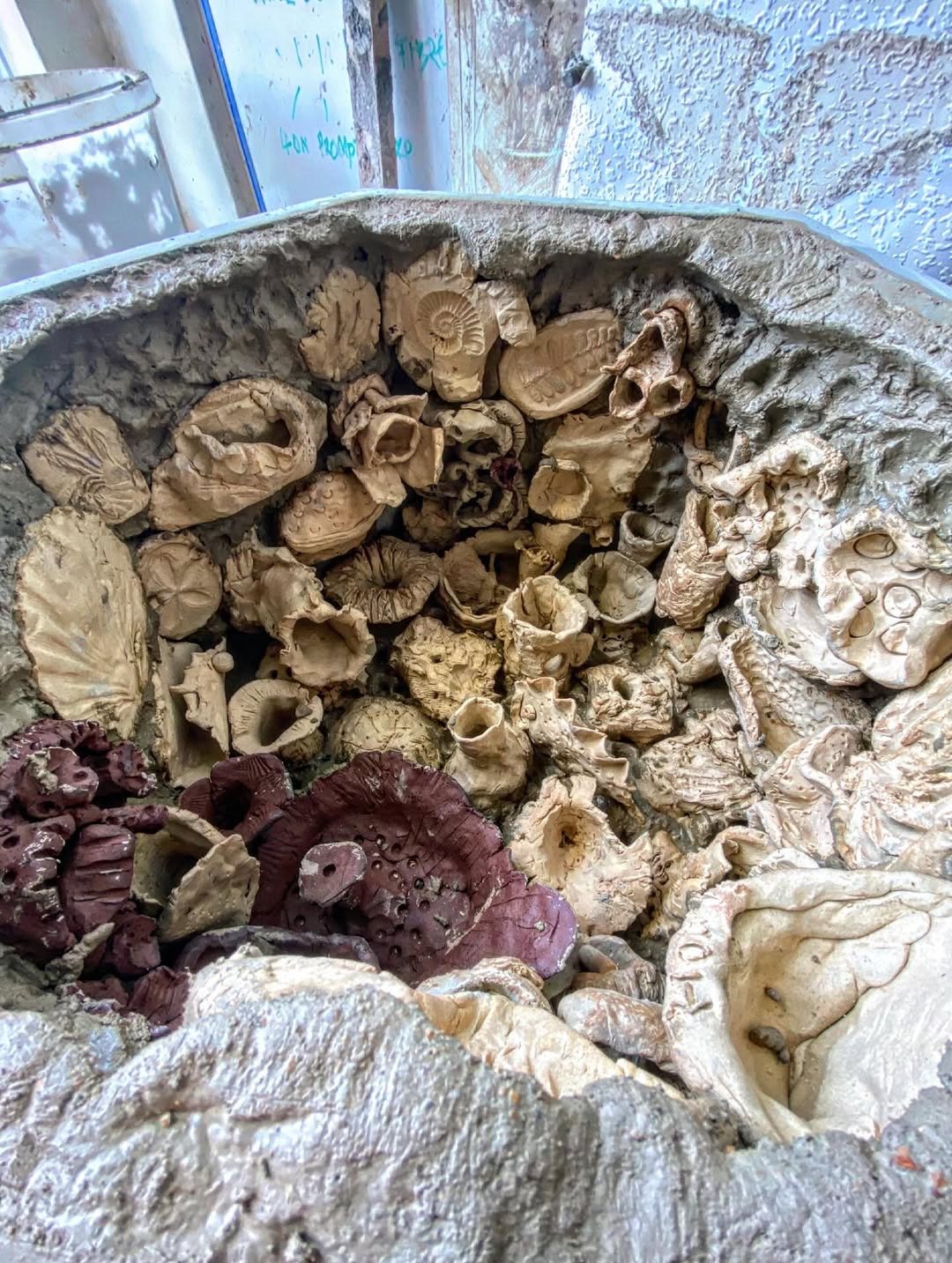
In many ways it feels like one of those ideas that people have intuitively understood for a very long time,…spending time in nature simply makes us feel better. What’s interesting now is the science is starting to explain why. Mandy and myself pondered the nature of factual aesthetics, and I pointed to the similar patterns we see in the clay artefacts everyday folks make when engaged in Artecology CoCreate workshops.
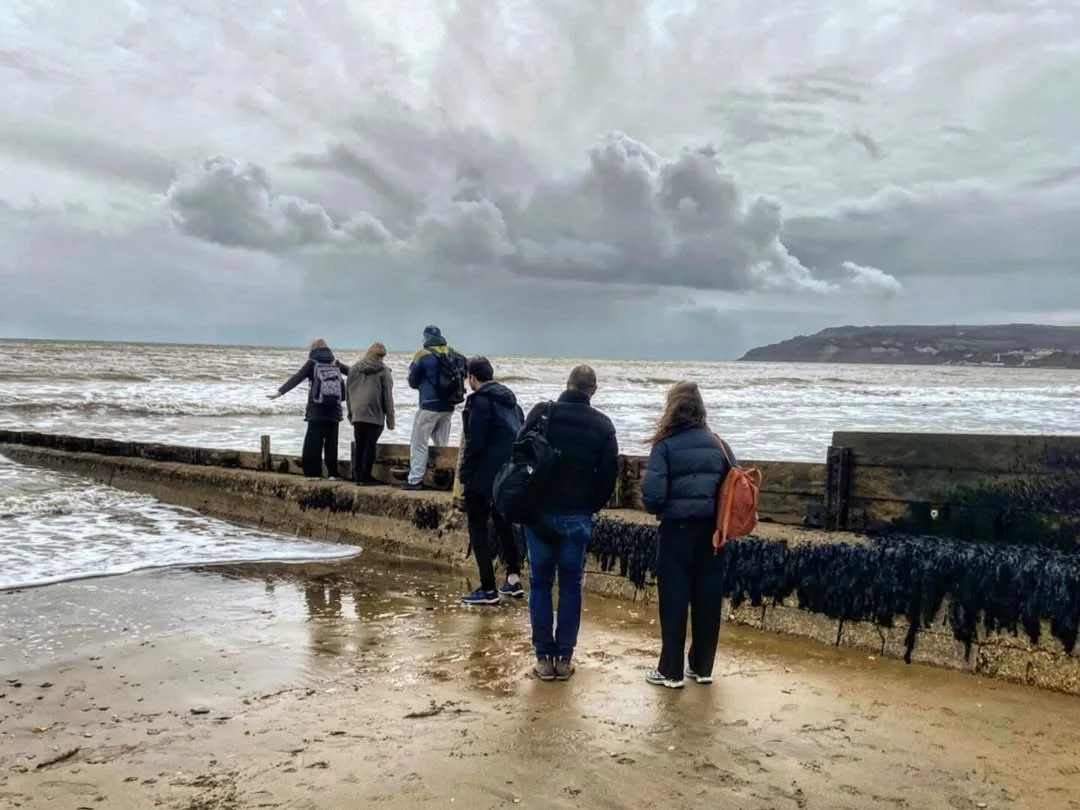
Biofilms and new conversations
Another highlight was hosting scientists and researchers from the National Biofilms innovation Centre here at the Artecology studio.
The centre brings together researchers from across the UK to explore the science and application of biofilms, those complex microbial communities that exist everywhere from soils and rivers to our own bodies.
It made for a fascinating day. Lots of lively conversation, early stage project thinking, and the sort of cross disciplinary discussion that often sparks unexpected ideas.
When microbiologists, designers, ecologists, artists, and engineers end up around the same table, things tend to get interesting.
Different scales, same system
Looking back over the past couple of weeks, there’s a thread that seems to run through it all.
Year 7 students asking big questions about the natural world.
Scientists studying microscopic ecosystems.
Conversations about fractal patterns and how nature shapes the way we feel.
Different scales of life. Different perspectives,… but all part of the same living system.
And, here at the Artecology studio, on the edge of Sandown Bay, it often feels like those worlds are starting to meet.